Moving computationally intensive scientific algorithms from desktop applications to cloud-based services presents unique challenges: How do you maintain performance when your code runs on ephemeral serverless infrastructure? How do you process datasets with 40 million points when Lambda functions have memory limits?
This talk shares our journey of migrating geological algorithms to a modern Python-based cloud platform. We'll explore the performance optimization techniques that made this possible, achieving 3–10× speedups through profiling-driven optimization across Python, C++, SIMD, GPU acceleration, and cloud-native batch processing.
This is not a talk about micro-optimizations or clever tricks. It's about building a sustainable performance engineering practice: measure first, optimize second, and automate the guardrails that prevent regression. Whether you're building ML pipelines, scientific simulations, or data processing systems, these principles will help you achieve high performance without sacrificing maintainability.
After this talk, you will learn how to:
Over the past 18 months, our team has migrated several battle-tested geological algorithms to a cloud-based Python platform. The work touched every layer: from designing high-level cloud-native architecture to low-level optimization and loop vectorization. Along the way, profiling repeatedly surprised us—the bottlenecks were not where we expected.
The fundamental tensions between desktop and cloud—gigabytes of RAM vs. strict memory limits, persistent state vs. ephemeral execution, vertical vs. horizontal scaling—meant we couldn’t simply “lift and shift” performance-critical code. Cloud-native requires rethinking our algorithms, not just our deployment.
Python/C++ Integration: When and Why
Our decision framework helps determine when to stay in Python using batching and memory optimizations, and when switching to C++ produces real leverage. I’ll share concrete examples of both paths—and how we decide between them.
The Performance Engineering Mindset
Developers’ intuition about bottlenecks can be wrong. I’ll demonstrate a real investigation where profiling revealed that a slow compute-intensive loop wasn’t bottlenecked by calculations—but by memory reallocations. This “measure first” methodology extends to compiler selection, where switching compilers delivered 25–80% speedups without changing a line of application code.
CPU and GPU Optimization
When profiling reveals CPU-bound hotspots, SIMD vectorization is often our first optimization. I’ll cover when it helps, when it doesn’t, and how we measure effectiveness. For massively parallel workloads, we move computation to the GPU—I’ll discuss when this makes sense and the Python integration patterns we use.
Cloud Architecture
Our serverless architecture enables horizontal scaling. I’ll cover how we handle data exchange and distribute computational effort between workers and maintain observability across distributed computations.
Lessons Learned
I’ll close with the key principles that emerged from this journey: why “Python first” remains our default, why measurement beats intuition, and how we prevent performance regressions through automated guardrails.

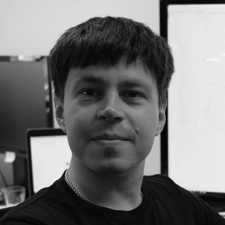
I’m originally from Nizhny Novgorod, Russia, where I completed a degree in Mathematics and Computer Science. I began my career in 2007 at an outsourcing firm working in an Ericsson division, implementing the SCTP transport layer protocol for high availability, high performance systems used across Ericsson products. Thinking about high availability, performance implications and cross platform support was a daily necessity. In 2013 me and my wife decided to go overseas for a year or two and we ended up in New Zealand where we live till these days. In New Zealand joined Tait Communications and worked on mission critical public safety communications. This role deepened my experience in embedded development and strengthened my Python skills. In 2017, I joined Seequent, transitioning from Unix/Linux to Windows, from C/C++ to Python as my primary language, and working with UI focused applications for the first time. At the end of 2024, I moved into Seequent’s newly formed department focused on migrating scientific high performance computing workloads to the cloud—an opportunity to apply and extend my background in performance profiling, optimization, and scalable architecture.